The Navy prides itself on tradition and heritage. However, Navy uniforms have gone through so many changes during their lifespan it kind of makes me laugh when people get shocked and surprised when a new change on our current service uniform is inbound. While these changes can be drastic (think Zumwalt’s era) or subtle (like adding zippers to dress blue pants), changes to uniforms and the regulations that govern them are probably one of the most strongest traditions the Navy has.
As with most wars, what branches of service issue in uniforms and personal equipment can drastically change during the course of the conflict, especially after things get going and the enemy or the environment proved something different had to me done. Development of better practices or, as was the case in World War II, the need to conserve materials can lead to significant and even long standing changes to what we wear as servicemembers later on. I bring all this up because these constant changes and even the personal style of the era makes things very confusing to current sailors and to even the military aficionado.
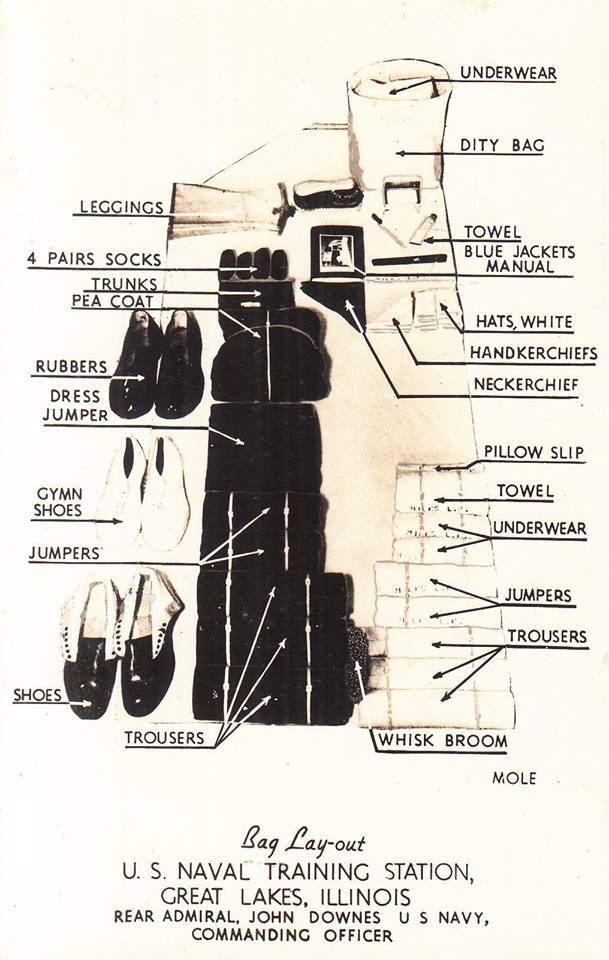
Prior to the U.S. involvement in World War II, the Navy uniform regulations outlined what was to be issued to enlisted sailors and what was required for officers to purchase. The enlisted were given their issue during the first days of recruit training at one of the Navy Training Stations. Officers were essentially given a shopping list and were to source their own tailor who specialized in Navy uniforms. As the war raged on, and the surge of personnel created strains on supply, adjustments were made to the standard lists. Further, the expectation to have the full compliment of dress uniforms was lowered as many were only drafted for the war’s duration (plus six months). Thus, what sailors were wearing by 1945 were a more simplified than to what sailors had in 1941 or earlier. Some of these changes became, in time, permanent and I will describe so below.
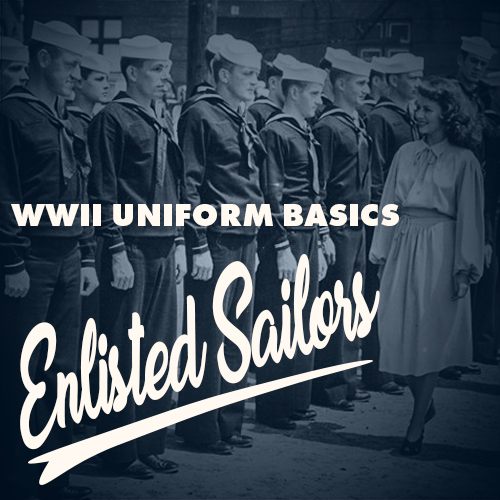
What I want to do in this article is just give a very basic overview of common uniforms worn throughout the war and something that I feel any living historian should have in his seabag… or at least on a shopping list to get. Having this stuff will make you well-suited for any living history event. I’ll go into much more detail on each specific uniform set in separate blogs.
One aspect to note in dress and undress uniforms is that there is a blue and a white version and you will sometimes see them referred to as “winter blues and summer whites.” Generally speaking, these uniforms are changed to correspond with the season. Each region prescribes when the shift in uniforms takes place based on the local seasonal change, if at all. For places like the tropics (think: Philippines, Guam, Hawaii, etc), the heat is year-round and thus the protocol was to allow whites to be worn throughout the seasons. The same could be said in regards to blues for places like Alaska and Iceland. With that in mind, a more accurate description of these uniforms would be “cold” and “hot” weather uniforms. However, another aspect to note is that the dress blue uniform is prescribed year round. Or, rather, it has no seasonal or regional restriction, unlike the dress whites which are prescribed for summer periods or in tropical areas where the heat is year-round. So, technically, while you could wear dress blues in Pearl Harbor (where the region is labeled as the tropics and thus whites can be worn all year) but you could not wear whites in December in Los Angeles.
Enlisted Uniforms
Let me outline the common uniforms worn be enlisted sailors First Class Petty Officer and below.Dress Blues
With its broad collar, dark blue (almost black) wool, white stripes (referred to as “piping”) and silk neckerchief, this uniform is unique and synonymous with the U.S. Navy. Sometimes affectionately referred to as Cracker Jacks after the popcorn snack with the same name which had a boy in sailor’s uniform as a mascot, it is simple in construction but still professional in appearance. It was borne out of practicality and functionality but slowly began to turn shift to a ceremonial uniform with the introduction of effective working uniforms. At this time in the service’s history, the uniform hadn’t been around that long. It’s undergone some changes along the way, some of which were made only recently… much to the dismay of salty sailors and veterans. Key components of the Dress Blues are:- The cap (either the white hat or blue cap)
- The Dress Blue Jumper
- The Blue Pants
- A White Undershirt
- The Neckerchief
- Black Socks
- Black Shoes.
Undress Blues
Somewhat similar in pattern as the dress blues, the undress uniform lacked the white piping on the cuffs and collar, the stars on the collar, and with squared off cuffs as opposed to buttoned cuffs. The trousers worn with it are the same 13-button wool pants for the dress blues. In the event of cold weather, the watchcap can be worn in lieu of the blue cap or white hat. You’ll often see the jersey (the wool sweater) worn under the jumper under cold conditions, too. The purpose of this uniform was slightly more duty related: office work, light duty, and even some boat handling work where heavy soiling of the uniform isn’t expected. It was also prescribed for off-duty wear, but I haven’t seen too many photos of sailors out in town with the undress uniform on save for overseas. The neckerchief was not intended to be worn with this uniform unless on duty or guard, such as standing watch at the quarterdeck and under arms, or sometimes on shore patrol during a port visit. Regulations state the neckerchief was to be worn by the coxswain operating a boat, however I don’t see that happening too often during the war and is most likely a pre-war regulation that didn’t stick.Dress Whites
The 1941 Uniform Regulations, which were published in May of that year, prescribe the dress whites. But these were already phased out by October of 1941 save for those who were still wearing them. Thus, it really doesn’t make sense to have this uniform in your sea bag for World War II, but I’ll describe it briefly as some sailors did have it in possession at the start of hostilities. The Dress Whites uniform consisted of:- The White Cap
- The Dress White jumper
- A white undershirt
- The neckerchief
- The White Trousers
- White or buff socks
- Black Shoes
Undress Whites
This uniform is in the same white cotton twill as the dress uniform, but without the embellishment of the blue collar and blue cuffs. Instead of buttoned cuffs, the sleeves are squared off and open in the same fashion as the undress blues. As with the undress blues, this was the summer or warm-weather light duty uniform and was also suitable for wear off duty. As prescribed, it also was intended to be worn with the neckerchief save for certain situations. However, after ALNAV #93 ordered the issuing of dress whites to cease after Oct 1941, the undress uniform remained to cover both ceremonial and duty roles. The uniform is simpler in design and therefore cheaper to make, saving the Navy money. It also made things easier on the sailor since this jumper lacked blue material in the collars and cuffs and thus made cleaning these jumpers simple. This uniform became the standard dress uniform well after the war, though it did experience some modifications along the way in regards to cut and material. It was only until October 2021 that the whole look was fully phased out and replaced with a design more similar to what we had in the pre-war era dress whites.Working Dress
The Uniform Regulations refer to a working dress, which is wearing more worn out Undress Blues (A or B) and Undress Whites that would not be appropriate for other details. I guess new sailors just designated a set to be trashed when they’re new to the fleet. This would be appropriate for working details like line handling, boat handling, and other duty. So, why not wear dungarees? I’ll explain that in the next section.Working Uniforms
At this time most work, as the Navy saw it, was to be handled wearing the Undress uniforms. The concept of a working uniform was solely for details in which heavy soiling of one’s clothes was to be expected. So jobs like painting, handling oil and coal, cleaning and operating guns, mechanics and artificers, and even those working with airplanes and submarines were considered too dirty for even the Working Dress uniforms. Enter the dungarees. First appearing in the regulations in 1913, the all denim uniform was initially only that: a denim jumper and denim trousers. By 1941, the jumper itself changed from an overshirt to being buttoned down the front like a jacket and a chambray shirt was added for warmer weather.- White hat
- Dungaree jumper or chambray shirt
- Dungaree pants
- Black cotton belt with brass buckle
- Black shoes